Genetics
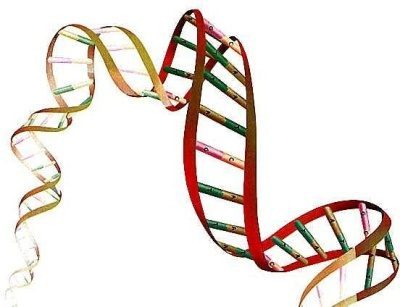 Genetics is a science, and therefore as such, involves "a certain knowledge of things by their principles and causes." So ... What are these things that as a science studying genetics?, Then, the "biological inheritance" and "Changes." And,
its principles and causes, are the "laws and principles" governing the
"similarities" and "differences" between individuals of the same
"species".Ddesglosar
try defining genetic explanatory way, and so go up one by one the steps
that lead to greater complexity within the same, which is the
"manipulation". First,
it is necessary to leave it for granted as clear a concept as simple,
but is giving up, and then result in as many concepts. AI
to speak of the characteristics pertaining to all living matter, it is
said that "every living thing arises from another like him", that is, to
have "characters" like those of its parent. And then what do we mean by "character"? It's
every quirk, every feature, either morphological (shape), functional,
biochemical (some authors also include psychological traits) that
provides a biological individual.And these "characters" or features do belong to the same "species". ("Species"
is a term that, according to the Dictionary of the Royal Spanish
Academy, refers to "the set of things similar to each other, having one
or more characters in common with each other").So
far everything points to the genetic studies similar characters which
are transmitted from parents to children, those who make them look like
each other. But
it happens that also have characters that are not similar, varying, and
which in this science are called "variations", and are also transmitted
genetically, or are influenced by the environment, which is called " paratype ".What
is still dark within this definition, is how they are transmitted from
one generation to another, these "characters" and these "variations"
appear this is where the concept of "gene", a term which derives the
name of this exciting science, which is genetics.
Genetics is a science, and therefore as such, involves "a certain knowledge of things by their principles and causes." So ... What are these things that as a science studying genetics?, Then, the "biological inheritance" and "Changes." And,
its principles and causes, are the "laws and principles" governing the
"similarities" and "differences" between individuals of the same
"species".Ddesglosar
try defining genetic explanatory way, and so go up one by one the steps
that lead to greater complexity within the same, which is the
"manipulation". First,
it is necessary to leave it for granted as clear a concept as simple,
but is giving up, and then result in as many concepts. AI
to speak of the characteristics pertaining to all living matter, it is
said that "every living thing arises from another like him", that is, to
have "characters" like those of its parent. And then what do we mean by "character"? It's
every quirk, every feature, either morphological (shape), functional,
biochemical (some authors also include psychological traits) that
provides a biological individual.And these "characters" or features do belong to the same "species". ("Species"
is a term that, according to the Dictionary of the Royal Spanish
Academy, refers to "the set of things similar to each other, having one
or more characters in common with each other").So
far everything points to the genetic studies similar characters which
are transmitted from parents to children, those who make them look like
each other. But
it happens that also have characters that are not similar, varying, and
which in this science are called "variations", and are also transmitted
genetically, or are influenced by the environment, which is called " paratype ".What
is still dark within this definition, is how they are transmitted from
one generation to another, these "characters" and these "variations"
appear this is where the concept of "gene", a term which derives the
name of this exciting science, which is genetics.
Based on these findings and studies conducted in 1906 by the American zoologist Thomas H. Morgan
on the chromosomes of the fruit fly (Drosophila melanogaster), we could
develop the theory of heredity cromos6mica which stated unequivocally
physical localizac16n of genes in the cell. Thanks to this theory it could also give a final explicaci6n to cases where accuracy is not met Mendel's laws as above.Similar to Mendel, Morgan dedic6 a systematic way across different varieties of fruit flies. These
flies they offered many advantages over the peas as they have a very
short life cycle, produce large offspring, are easy to grow, so s6lo
have four chromosomes and have hereditary characteristics easily
observable, such as eye color, presence or absence of wings, etcetera.
Genes and Disease

Hemophilia:Deficiency of normal blood clotting.Is caused by the absence of a protein coagulant.The gene was isolated and cloned in 1984.
Alcoholism:In March 1990, researchers from Utah, USA, announced that a gene located on chromosome 11 could be involved in the development of the disease.
Huntington's chorea:Neurological disorders such as memory loss and uncontrolled movements.The gene is on chromosome 4.
Sickle Cell Anemia:Injury caused by defective hemoglobin production, unable to carry oxygen in the blood.The mutant gene was isolated in 1980.
Mucoviscosidosis:Or cystic fibrosis.Abnormal gene found in 1990 on chromosome 7.It affects thousands of children, causing them respiratory and digestive disorders.Congenital HypothyroidismIt affects about 80 children in Chile, causing profound mental retardation if not detected before six months.
Determinant of Sex:In July 1991, British biologists announced that the sex of the embryo is determined by the activation of a gene found in the male chromosome Y.
X Mental Retardation - Fragile:This is the most common inherited cause of mental retardation.Characterized by a sort of breakdown of one arm of chromosome X.They are looking for the corresponding gene.
Duchenne myopathy:Muscle atrophy that occurs about two years of age and leads to total paralysis.
Manic - Depression:Also called bipolar disorder, affects about 2 percent of the population.The responsible gene was located in 1987, on chromosome 11.
Schizophrenia:Affects 1 percent of the population.In 1989, psychiatrists at the University of London found the gene of madness in a region of chromosome 5.Lesch NyhanBlindness and paralysis.Occurs at a frequency of 1 in 3000 in the Jewish populations originating in Central Europe.Gene cloned in 1980.ADA deficiencyThere are 100 reported cases in the world, gene therapy, ethics to point to correct the gene.Congenital MalformationsThe risk of a pregnant woman has a child with a malformation gene, tica at birth is four percent.Among the cases m s common are:
Hydrocephalus:Excessive size of the head due to excessive accumulation of fluid inside the skull.
Microcephaly:Generally small and misshapen head, caused by an underdevelopment of the braincase.
Cleft Lip:Presence in the newborn of a cleft lip.
Imperfect Year:Deformity known as imperforate. The baby born without anus.Spina Bifida:Neural tube defect is an abnormality in the closure of one or more vertebra
Bibliography
www.monografias.com

Woao,it is excellent....
ResponderEliminar